Junior Rodeo
The Rodeo
Junior Rodeo
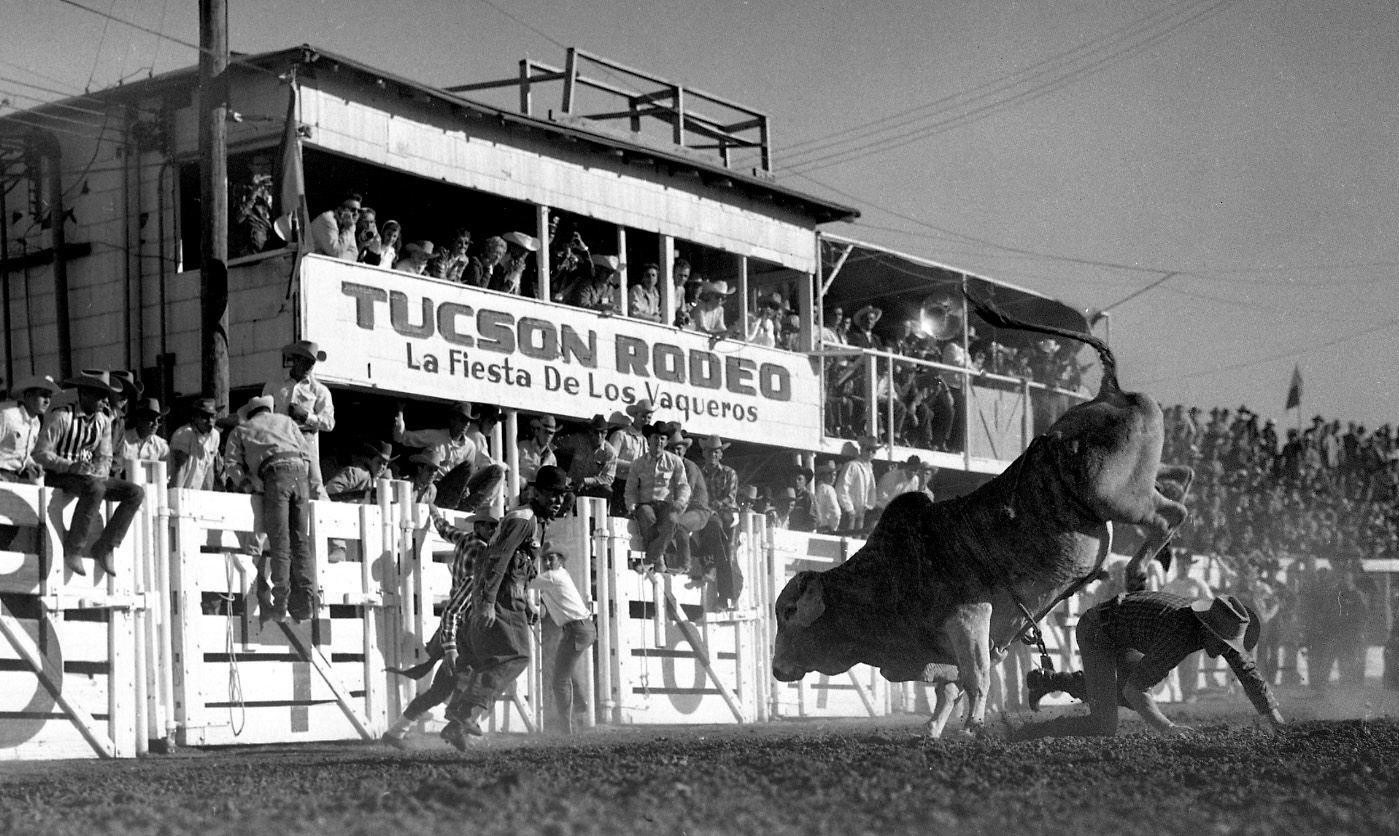
Junior Rodeo is where the next generation of rodeo athletes gets their first taste of the arena.
Every young rider who learns to rope, every kid who discovers barrel racing, and every little one who holds onto that sheep for dear life is becoming a part of a western tradition that has persisted for well over a hundred years.
Junior Rodeo creates a fun and encouraging environment for those skills to be learned, practiced, and passed on from one generation to the next.
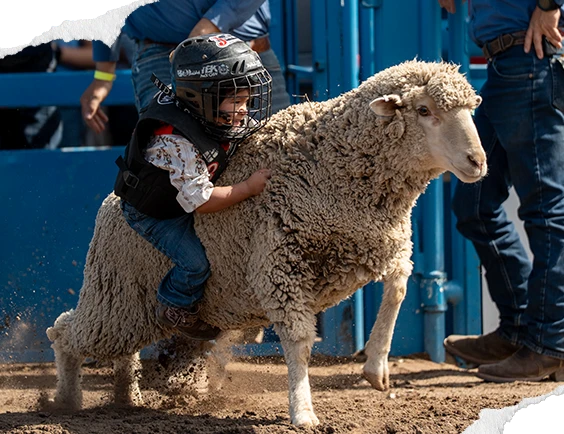
Every performance day, we start with one of the most entertaining (and cutest) events of the rodeo: Mutton Bustin’. During this event kids ages 4-6 grab on tight and hold on as long as they possibly can. It’s fast, unpredictable, and unbelievably fun to watch.
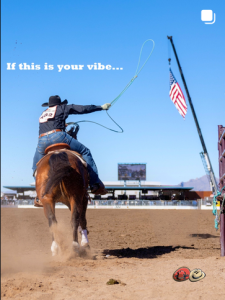
Immediately following Mutton Bustin’, the Junior Rodeo athletes take over the arena. Each day we’ll see athletes compete in Steer Riding, Barrel Racing, Calf Touch, Goat Tying and Team Roping.
Our honest advice: Do not sleep on Junior Rodeo. Not only will you get to witness some truly adorable kids, you’ll see serious athleticism from up and coming rodeo stars.
Want to Compete?
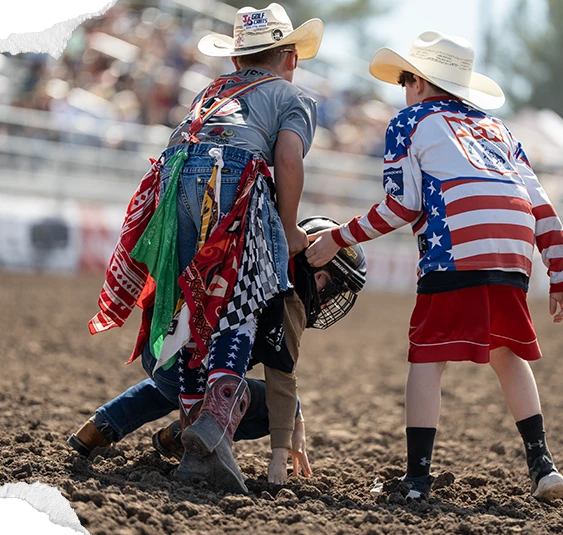
Registration opens November 1st, and many of the events fill fast. In fact, consider this your warning: Mutton Bustin’ always sells out!
If your cowboy or cowgirl wants their chance in the arena, don’t wait to register!
How Junior Rodeo Works
Junior Rodeo gives young athletes the opportunity to develop their skills in the arena while carrying forward the Western traditions at the heart of the Tucson Rodeo. Each day begins at 12:30PM with Mutton Bustin’, followed by four unforgettable Junior Rodeo events.
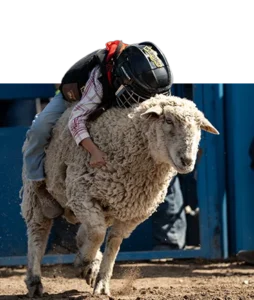
Mutton Bustin’
Consider this the gateway to rodeo. Young riders (ages 4-6) climb aboard a sheep, grab on, and see how long they can hang onto a sheep that is trying to get that kid off its back. It may be one of the cutest events of the day, but ask any kid who tries it and they’ll tell you it’s much, much harder than it looks.
This is every young competitor’s first opportunity to experience the excitement of an arena, hear a crowd cheering them on, discovering just how much fun rodeo can be.
Today it might be sheep…but one day many of our young competitors just might ride a horse.
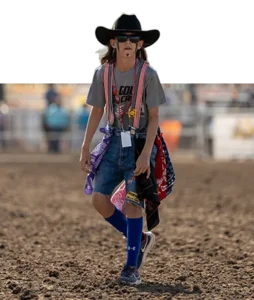
Steer Riding
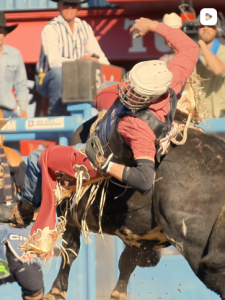
A stepping stone toward roughstock competition, Steer Riding challenges young rodeo cowboys and cowgirls to stay aboard a steer while demonstrating balance, control, and sheer determination.
For athletes who dream of competing in roughstock as they get older, just like dad or grandpa used to, these early rides are a chance to start developing the skills and the courage they’ll need at that next level.
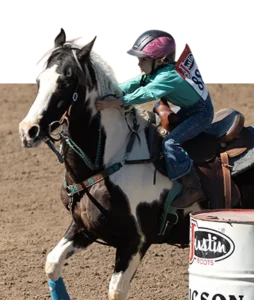
Barrel Racing
Speed and precision are critical as young riders and their horses race the familiar cloverleaf pattern around three barrels. Just like the pros they’ll watch later in the day, Junior Rodeo competitors must complete the pattern correctly and stop the clock as fast as possible. The fastest time wins the day!
Same three barrels, same race against the clock. But one day, they may just barrel race with the pros!
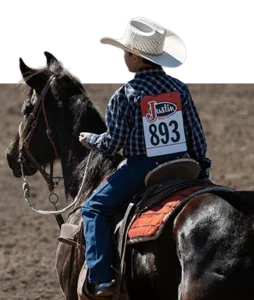
Calf Touch
Fast feet for both the athlete and the calf make this event a crowd favorite! Junior Rodeo competitors have to rope their calf, then quickly jump off and touch their calf to stop the clock. And just like Tie-Down Roping, the fastest time wins! The fun doesn’t stop when the ride ends! With no step (or parent) waiting in the arena, these young athletes have to figure out how to get back on their horse. They come up with some ingenious ways of accomplishing it, making the remount almost as much fun to watch as the event itself!
This event is the introduction to one of the most technical events in rodeo.
Goat Tying
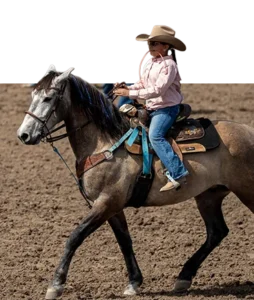
Goat Tying is a timed event that puts horsemanship, speed, coordination, and some seriously quick hands to the test. The clock starts as the rider crosses the timing line and races toward a goat staked at the opposite end of the arena. The rider must get their horse under enough control and speed approaching the goat, so they can dismount and race on foot to the goat. Once they reach the goat, the athlete catches and flanks the goat (get the goat on its side on the ground) then uses the rope they’ve carried into the arena to tie three of its legs. Time stops when they throw their hands up.
But the run isn’t over yet! The goat must remain tied for six seconds for the run to count. If the goat kicks free under six seconds, it’s no time.
As a Junior Rodeo athlete develops, they’ll need faster hands, and stronger horsemanship.
Team Roping
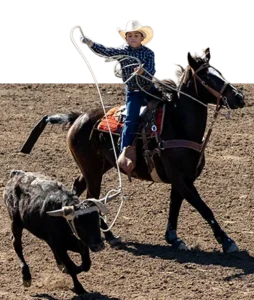
Just like the adults, team roping involves two riders, one steer, and a whole lot of coordination. Team Roping in Junior Rodeo can involve two Junior Rodeo athletes, or one Junior Rodeo athlete and their parent (or favorite rodeo adult). Competitors work together as header and heeler, developing the horsemanship, roping skills, and all-important teamwork they’ll continue building throughout their rodeo career.
As athletes develop, so does the competition.
How It’s Scored
Junior Rodeo may feature younger competitors, but the competition is very real. Depending on the event, athletes compete for the fastest time, longest ride, or best performance. Penalties can be added for mistakes, while precision, control, and execution can make all the difference in the standings.
Throughout Rodeo week, competitors have the opportunity to vie for a top spot, and a chance to advance to Championship Sunday! This is their chance to compete in front of our biggest crowd in the same arena where generations of rodeo athletes have made their mark.
See Junior Rodeo Live
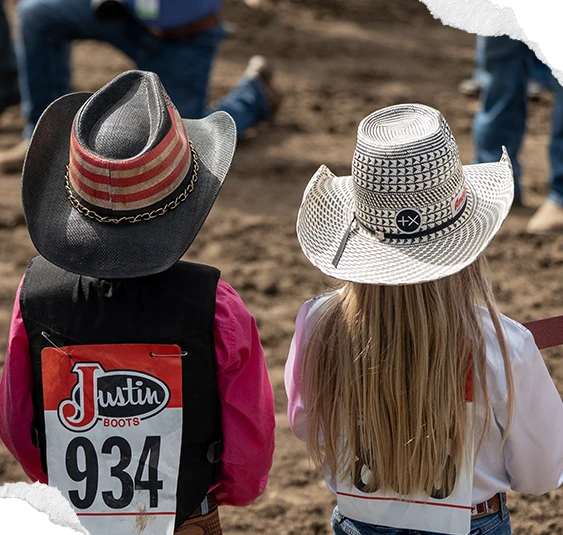
Junior Rodeo begins at 12:30 PM each day of the Tucson Rodeo, starting with Mutton Bustin’ and followed by Junior Rodeo competition.
Junior Rodeo FAQs
Everything you need to know about rodeo's future stars.
What is Junior Rodeo?
Junior Rodeo gives young athletes the opportunity to compete in rodeo events while developing horsemanship, athletic skills, sportsmanship, confidence, and an appreciation for Western traditions. At the Tucson Rodeo, Junior Rodeo includes Steer Riding, Barrel Racing, Calf Touch, Goat Tying, and Team Roping.
What is Mutton Bustin’?
Mutton Bustin’ is an introductory rodeo event where young children climb aboard a sheep and try to hold on as long as possible. It’s often a child’s first opportunity to experience rodeo from inside the arena, and one of the most popular events for Tucson Rodeo spectators.
Do kids need rodeo experience to participate in Junior Rodeo?
Experience requirements vary by event. Junior Rodeo includes real athletic competition, and some events require riding, roping, or horsemanship skills. Families should review the participation requirements for the specific event before registering.
Is Junior Rodeo the same as professional rodeo?
Many of the fundamentals are! Junior athletes begin developing the same horsemanship, timing, balance, roping, and riding skills used at higher levels of rodeo. Events and rules may be adapted for younger competitors, allowing athletes to develop safely as their abilities grow.
Can my child get in if our family has no rodeo background?
Junior Rodeo can be a great introduction to the sport, but the path into rodeo looks different depending on the event your child is interested in. Mutton Bustin’ offers younger children an early taste of the arena, while older athletes can continue developing riding, roping, and horsemanship skills through youth rodeo programs and competition.
When does registration for Junior Rodeo open?
Registration opens November 1st, and Mutton Bustin’ sells out every year. So please, if your little one would like to participate, don’t wait to register!
Is Junior Rodeo worth coming early to watch?
Absolutely! Junior Rodeo isn’t just a warm-up for the main event. These young athletes are competing, developing real rodeo skills, and carrying forward generations of tradition. Plus…watching a four-year-old attempt to ride a sheep is objectively excellent entertainment.
Is there a Junior Rodeo championship?
Yes! Top competitors have the opportunity to compete on our final day for the coveted title of Junior Rodeo Champion! Missing any day of Junior Rodeo should be a crime, but especially our final Sunday.
Why does the Tucson Rodeo have a Junior Rodeo?
Junior Rodeo gives young athletes a place to develop their skills, compete, learn from experienced rodeo families, and become part of a tradition that has been passed from generation to generation. We firmly believe these competitors are the future of rodeo, and we’re honored to give them a platform to compete.